
8 Best Outdoor Heating Solutions for Patios in 2026
You've invested in your outdoor space, comfortable seating, maybe some string lights, a view you actually enjoy. But once temperatures drop below 60°F, that patio sits empty for months. Finding the best outdoor heating solutions can mean the difference between abandoning your deck in October and enjoying it well into the cooler seasons.
The market offers everything from propane tower heaters to electric infrared panels, fire pits to heated furniture. Each comes with trade-offs in heat output, energy efficiency, and installation complexity. At wrmth furniture, we've spent years developing heated Muskoka chairs as an alternative to traditional patio heaters, so we understand what actually keeps people comfortable outside when the temperature drops.
This guide breaks down eight outdoor heating options for 2026, comparing fuel types, coverage areas, and real-world performance. Whether you're warming a small apartment balcony or outfitting a commercial restaurant patio, you'll find a solution that fits your space, climate, and budget.
1. Heated outdoor furniture by Wrmth
Heated outdoor furniture takes a different approach than traditional patio heaters by building warming elements directly into chairs. Instead of trying to heat the air around you, these pieces deliver consistent dry heat exactly where you're sitting. Wrmth manufactures heated Muskoka chairs with embedded heating systems that warm your back, seat, and legs through conductive heat transfer.
What it is and how it heats you
These chairs use low-voltage electric heating elements integrated into the seating surface and backrest. When you sit down, the heat transfers directly to your body rather than dissipating into the surrounding air. The system draws a maximum 150-200 watts per chair during initial warm up, roughly the same as two standard light bulbs, and reaches comfortable temperatures within seven - ten minutes. You control the intensity degree by degree through variable temperature settings, allowing you to adjust based on outdoor conditions and personal preference.
Where it works best on a patio or dock
Heated furniture works anywhere you'd place regular outdoor seating, but it excels in exposed areas where traditional heaters struggle. On a windy dock, a propane tower heater loses most of its heat immediately, while a heated chair continues warming you regardless of wind speed. These chairs suit decks, patios, poolside areas, and waterfront docks equally well. Because they don't rely on radiant heat zones, you can position them individually rather than clustering around a central heat source.
What to look for before you buy
Check whether the chair requires hardwired installation or uses a standard outlet connection. Models with GFCI-protected plugs offer simpler setup for most homeowners. Look for waterproof ratings of IP65 or higher to ensure the heating elements survive rain and snow adn the whole thing can be left outdoors year round. The frame material matters too, composite adn plastic materials withstand weather better than untreated wood. Verify the warranty coverage on both the heating system and the furniture structure, as these typically carry separate terms.
Heated furniture eliminates the choice between staying warm and staying comfortable, you get both in the same seat.
Safety and upkeep basics
Modern heated furniture includes automatic shutoff features that prevent overheating and reduce fire risk. The heating elements operate at temperatures well below combustion thresholds, typically maxing out around 110°F. You'll need access to a GFCI outlet within cord length, usually 15 feet. Maintenance involves standard outdoor furniture care, wiping down surfaces, checking electrical connections seasonally, and storing cushions if removable. The heating system itself requires no regular maintenance beyond keeping the connections clean and dry.
Typical cost to expect in 2026
A quality heated outdoor chair runs $1,200 to $4,500 per unit, depending on materials, heating capacity, and customization options. This initial investment includes both the furniture and the heating system, eliminating the need for separate patio heaters. Operating costs remain minimal at $0.02 to $0.04 per hour based on average electricity rates, making them among the most economical best outdoor heating solutions for extended use.
2. Electric infrared patio heaters
Electric infrared heaters mount to walls, ceilings, or freestanding poles and emit invisible infrared radiation that warms objects and people directly. Unlike convection heaters that warm air, these units create instant heat the moment you turn them on, making them among the best outdoor heating solutions for targeted coverage areas.
What it is and how it heats you
These heaters use electric coils or carbon filaments that emit infrared waves, similar to the sun's warmth. The radiation travels through air without heating it, then converts to heat when it strikes your skin, clothing, or nearby surfaces. Most units operate at 1,500 to 3,000 watts and produce noticeable warmth within 30 seconds of activation.
Where it works best on a patio or dock
Infrared heaters excel in semi-enclosed spaces like covered patios, pergolas, and three-season rooms where you can mount them overhead or on walls. They perform adequately on open decks if positioned within 6 to 8 feet of seating areas. Wind reduces their effectiveness less than propane heaters, but exposed locations still see diminished performance.
What to look for before you buy
Choose units with IP ratings of IP44 or higher for weather resistance. Wall-mounted models require dedicated circuits, while plug-in versions need GFCI-protected outdoor outlets. Look for adjustable angle brackets that let you direct heat exactly where needed.
Infrared heaters deliver warmth without the wait, perfect for spaces where you need heat on demand.
Safety and upkeep basics
Install heaters with proper clearance from combustible materials, typically 3 feet minimum. The heating elements stay cool enough to avoid burns but hot enough to warrant caution. Clean reflector panels quarterly to maintain efficiency.
Typical cost to expect in 2026
Quality electric infrared heaters cost $150 to $600 per unit, with commercial-grade models reaching $1,200. Electricity consumption runs $0.15 to $0.30 per hour depending on wattage and local utility rates.
3. Freestanding propane patio heaters
Freestanding propane heaters are the mushroom-shaped towers you see outside restaurants and bars. These units burn liquid propane from a 20-pound tank hidden in the base, creating a column of radiant heat that extends upward and outward. They've dominated the outdoor heating market for decades because they're portable, require no installation, and deliver substantial warmth in a circular pattern.
What it is and how it heats you
These heaters burn propane through a perforated metal screen or dome at the top of a 6 to 7-foot pole. The combustion creates radiant heat that spreads in a 360-degree radius, warming anyone within the coverage zone. Most units produce 40,000 to 48,000 BTUs, enough to create a comfortable bubble of warmth in a 15 to 20-foot diameter.
Where it works best on a patio or dock
Freestanding heaters work best on level surfaces with minimal wind exposure. You'll get optimal performance on covered patios, courtyards, or against building walls that block prevailing winds. They struggle on open docks or exposed decks where wind dissipates heat before it reaches you.
What to look for before you buy
Select models with tip-over automatic shutoff switches and weighted bases that resist tipping. Look for units with easily accessible propane tanks and clear fuel gauges. Weather-resistant finishes matter if you plan to leave the heater outdoors between uses.
Propane heaters deliver impressive heat output, but that power disappears quickly in windy conditions.
Safety and upkeep basics
Position heaters with 3-foot clearance from walls, furniture, and overhead structures. Check hose connections for leaks using soapy water before each season. Replace propane tanks outdoors and ensure the valve seals properly.
Typical cost to expect in 2026
Quality freestanding propane heaters cost $150 to $400, with commercial models reaching $800. Propane refills run $15 to $25 per tank, providing roughly 10 hours of operation at full heat.
4. Pyramid propane patio heaters
Pyramid heaters combine function with visual appeal, housing a visible flame inside a glass tube that runs up the center of a triangular metal structure. These units burn propane just like standard freestanding heaters but add an aesthetic element that doubles as ambient lighting after sunset.
What it is and how it heats you
The pyramid design features a central quartz glass tube containing a real flame, with heat radiating outward through the glass and upward through a metal cap. These heaters typically produce 40,000 BTUs while creating a flickering flame effect that mimics a fireplace. The glass stays hot during operation but shields the flame from moderate wind better than open-flame designs.
Where it works best on a patio or dock
These units suit entertainment areas where appearance matters, like outdoor dining spaces, pool decks, or upscale patios. The triangular base requires flat, stable ground and takes up more floor space than cylindrical models. Wind still affects performance, making covered or semi-enclosed areas ideal.
What to look for before you buy
Choose models with tempered or heat-resistant glass tubes rated for outdoor temperature swings. The base should include wheels for mobility despite the heavier weight. Verify that replacement glass tubes are readily available, as these can crack from impact or extreme temperature changes.
Pyramid heaters trade some efficiency for ambiance, but that visual element often justifies the compromise for social spaces.
Safety and upkeep basics
Maintain clearance of 3 feet minimum from all combustible materials. The glass tube reaches temperatures that can cause burns, so position heaters away from traffic patterns. Clean the glass quarterly to maintain heat output and visual clarity.
Typical cost to expect in 2026
Pyramid propane heaters cost $200 to $600 depending on materials and finish quality. Operating costs match standard propane heaters at roughly $2.50 per tank refill for 10 hours of use.
5. Natural gas patio heaters
Natural gas patio heaters connect directly to your home's gas supply line, eliminating the need for propane tank replacements. These heaters burn natural gas through a permanent connection, providing unlimited fuel and consistent heat output without interruption. Most units produce 35,000 to 50,000 BTUs and look similar to freestanding propane models but require professional installation and fixed positioning.
What it is and how it heats you
These heaters operate identically to propane versions but draw fuel from a dedicated gas line run from your home's meter. The burner creates radiant heat through a metal dome or screen, spreading warmth in a circular pattern. You get the same heating mechanism as propane units but with the convenience of never running out of fuel mid-evening.
Where it works best on a patio or dock
Natural gas heaters suit permanently configured outdoor spaces like built-in seating areas, outdoor kitchens, or fixed entertainment zones. The hardwired gas connection limits flexibility, making these impractical for docks or spaces where you move furniture seasonally. They work best within 20 feet of your home's exterior gas lines.
What to look for before you buy
Confirm your home has adequate gas supply capacity before purchasing. You'll need a licensed plumber to run gas lines and install shut-off valves. Look for models with electronic ignition systems that eliminate the need for pilot lights.
Natural gas heaters trade mobility for convenience, once installed, you never touch a fuel tank again.
Safety and upkeep basics
Schedule annual inspections of gas line connections and burner assemblies by a qualified technician. Install heaters with proper clearances matching propane requirements. Test connections for leaks during routine maintenance.
Typical cost to expect in 2026
Natural gas heaters cost $300 to $800, plus $500 to $1,500 for professional installation including gas line extensions. Operating costs run $1.50 to $3.00 per hour depending on local natural gas rates, making them among the most economical best outdoor heating solutions for frequent use.
6. Propane fire pit tables
Propane fire pit tables merge furniture with heating, creating a central gathering point that doubles as both a tabletop and a heat source. These units house a propane burner beneath decorative fire media like lava rocks or glass beads, producing flames that provide radiant warmth while maintaining a flat surface for drinks and plates. They've become popular alternatives to traditional fire pits because they eliminate smoke, ash, and the constant attention wood fires demand.
What it is and how it heats you
These tables contain a concealed propane tank compartment and a burner system controlled by a gas valve. The flames rise through fire media arranged in a central bowl or linear trough, creating 15,000 to 65,000 BTUs depending on the model. Heat radiates outward from the fire, warming everyone seated around the perimeter while the table surface stays cool enough to use.
Where it works best on a patio or dock
Fire pit tables work best on level patios, decks, and courtyards where multiple people gather. The table format encourages conversation circles and works well in covered outdoor rooms or against windbreaks. Exposed docks see reduced performance as wind disrupts the flame and disperses heat quickly.
What to look for before you buy
Choose tables with easy-access tank storage and weather-resistant frames made from aluminum or powder-coated steel. Look for models with adjustable flame controls and automatic ignition systems. Verify the fire media is included, as some manufacturers sell it separately.
Fire pit tables turn heating into a social centerpiece, combining warmth with functionality in one piece.
Safety and upkeep basics
Maintain 2-foot clearance from seating and keep combustible materials away from the flame area. Cover the burner when not in use to prevent water accumulation. Check connections for leaks before each season and clean burner ports annually.
Typical cost to expect in 2026
Quality propane fire pit tables cost $400 to $2,000 depending on size and materials. Operating costs run $2 to $3 per tank for roughly 10 hours of use, making them competitive among the best outdoor heating solutions for group settings.
7. Wood burning fire pits and chimineas
Wood burning options deliver authentic fire ambiance with crackling flames and the traditional smell of burning wood. These units range from simple metal bowl designs to elaborate chimineas with enclosed fireboxes. Unlike gas-powered alternatives, wood fires require active management and produce smoke that can drift across your patio depending on wind direction.
What it is and how it heats you
Wood fire pits burn seasoned firewood or logs in open or contained metal structures, creating radiant heat through direct flame and glowing embers. Chimineas feature a bulbous body with a front opening and chimney stack that directs smoke upward. Heat output varies wildly based on fire size, typically producing 30,000 to 60,000 BTUs when actively burning.
Where it works best on a patio or dock
These units work best on non-combustible surfaces like concrete patios, stone pavers, or fire-rated pads. You need adequate space for smoke dispersion and compliance with local fire regulations. Wooden decks require protective barriers, while docks present safety concerns due to limited escape routes.
What to look for before you buy
Select models with sturdy construction and high-temperature paint that resists rust and corrosion. Look for spark screens or mesh covers that contain embers. Verify your area allows wood burning, as many municipalities restrict or ban these among the best outdoor heating solutions due to air quality concerns.
Wood fires create unmatched atmosphere but demand constant attention and cleanup that gas alternatives eliminate.
Safety and upkeep basics
Keep 10-foot clearance from structures and have a fire extinguisher or water source nearby. Never leave fires unattended and ensure complete extinguishment before leaving. Remove ash regularly and inspect for rust or structural damage seasonally.
Typical cost to expect in 2026
Basic fire pits cost $100 to $500, while quality chimineas run $200 to $800. Firewood costs $150 to $300 per cord, with consumption varying based on burn frequency and duration.
8. Pellet patio heaters
Pellet patio heaters burn compressed wood pellets in a self-contained system that automates fuel feeding and combustion control. These units combine the warmth of wood fire with the convenience of set-it-and-forget-it operation, eliminating the constant attention traditional wood fires demand. They've gained traction among homeowners seeking renewable heating options that produce less smoke than standard wood burning.
What it is and how it heats you
These heaters use an electric auger system that automatically feeds wood pellets from a hopper into a burn chamber. The pellets ignite and create radiant heat through convection and radiation, typically producing 30,000 to 50,000 BTUs. You control temperature through electronic settings that adjust pellet feed rates, maintaining consistent warmth for hours without manual intervention.
Where it works best on a patio or dock
Pellet heaters work well on covered patios and screened porches where you can protect the electronics from direct rain. The units require level placement on non-combustible surfaces and perform best in sheltered areas with minimal wind exposure. Their weight and need for electrical connection make them impractical for docks.
What to look for before you buy
Choose models with large hopper capacity that extends burn times between refills. Look for units with battery backup ignition systems for power outage operation. Verify the availability of quality pellet fuel in your area, as performance varies significantly between pellet grades.
Pellet heaters automate wood burning but add electrical dependency that traditional fire pits avoid.
Safety and upkeep basics
Position heaters with 3-foot clearance from combustibles and ensure proper ventilation for exhaust gases. Clean ash pans after every 20 hours of operation and vacuum the burn chamber monthly. Inspect auger mechanisms seasonally for jams.
Typical cost to expect in 2026
Quality pellet patio heaters cost $800 to $2,500 depending on capacity and features. Wood pellets run $250 to $350 per ton, providing roughly 60 to 80 hours of operation, making them economical among the best outdoor heating solutions for frequent use.
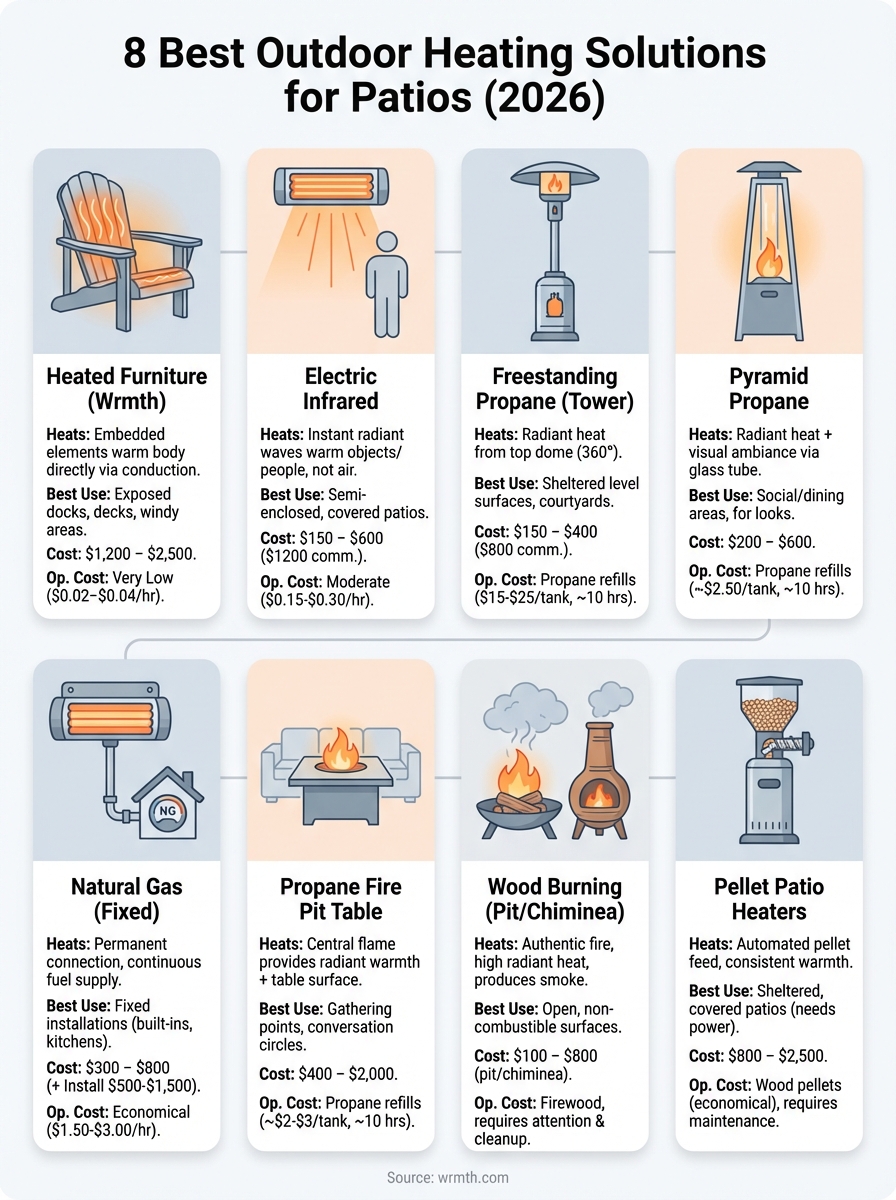
Next steps
You've compared eight of the best outdoor heating solutions available in 2026, each with distinct trade-offs in cost, convenience, and performance. The right choice depends on your specific situation: how often you use the space, whether you need portability, and what level of maintenance you're willing to handle.
If you're tired of choosing between staying warm and staying comfortable, heated outdoor furniture from Wrmth delivers both in a single investment. Unlike traditional patio heaters that fight losing battles against wind and waste energy heating empty air, heated chairs warm you directly while providing the comfortable seating you already need. The elimination of fuel tanks, ongoing refills, and safety clearances simplifies your outdoor setup while reducing long-term operating costs.
Start by evaluating your space layout and usage patterns. Match those requirements against the heating solutions that fit your budget and maintenance preferences. Your patio can stay usable well beyond summer when you select the right heating approach for your needs.