
6 Benefits Of Infrared Therapy For Pain, Skin & Mood Health
Your body responds to heat in remarkable ways. When therapeutic warmth reaches your skin and underlying tissues, it triggers a cascade of physiological responses, from increased blood flow to the release of feel-good endorphins. Research into infrared heat has helped reveal why this type of gentle, penetrating warmth can reduce muscle tension, ease chronic pain, and support mental well-being. These benefits have moved from clinical settings into everyday wellness routines, and for good reason. This combination of biological response and physical comfort addresses everything from stubborn muscle pain to stress-related tension.
At wrmth furniture, we design our heated Muskoka chairs around these same biological principles, using a more efficient delivery method. Our embedded carbon-fiber heating technology delivers controlled, dry warmth directly to your body, producing many of the same therapeutic effects associated with infrared therapy, without the need to heat surrounding air. This direct-contact warmth turns your deck or dock into a recovery space. Whether you are managing chronic back pain, seeking relief from arthritis, or simply want to unwind after a long day, understanding how therapeutic heat works helps you make the most of it.
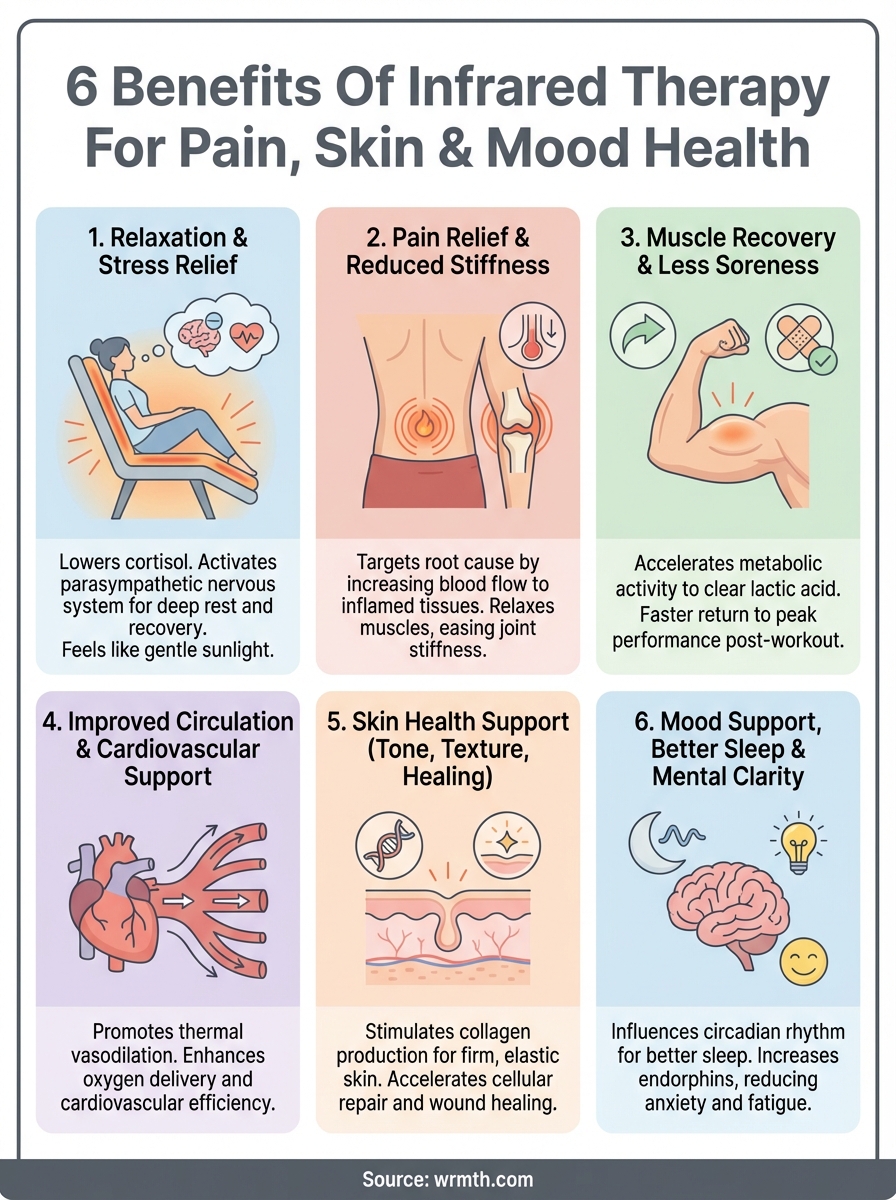
This guide breaks down six evidence-backed benefits of therapeutic heat, covering pain management, skin health, and mental well-being. You will learn what the research actually says, who stands to benefit most, and how to incorporate this type of heat therapy into your daily life
1. Relaxation and stress relief with direct warmth
Your nervous system shifts gears when therapeutic warmth penetrates your tissues. This is not the surface-level heat of a space heater or the intense blast of a sauna. Instead, controlled heat reaches deeper layers of muscle and connective tissue, triggering physiological changes that lower cortisol levels and activate your parasympathetic nervous system. That is the state where your body repairs, digests, and recovers. Direct warmth also signals your brain that you are safe, which is exactly what stress-weary bodies need.
How it works
Therapeutic heat delivers warmth directly to muscles and joints, bypassing the surrounding air. This penetrating warmth dilates blood vessels, improving oxygen delivery throughout your body. Your heart rate may slow slightly, your breathing deepens, and your muscles release tension they have been holding. The experience feels similar to lying in warm sunlight, but without ultraviolet exposure or unpredictable weather.
Direct warmth creates an immediate sense of comfort that helps your body transition from fight-or-flight mode into a state of rest.
What the evidence shows
Research supports what users report. Studies on infrared and thermal heat therapy show measurable reductions in stress markers, including lower cortisol and improved heart rate variability. Athletes and chronic pain patients both report feeling calmer after sessions. A 2015 study found that regular infrared sauna use correlates with reduced anxiety and depression symptoms, though the exact mechanisms continue to be studied. The benefits of therapeutic heat extend beyond the physical, creating mental space for recovery.
How to use it safely
Start with 15 to 20 minute sessions and notice how your body responds. You should feel warm and relaxed, not overheated or uncomfortable. Stay hydrated before and after, as warming can increase perspiration even outdoors. If you have cardiovascular concerns, consult your doctor. Heated furniture allows you to control both temperature and duration, letting you stop anytime without leaving your seat.
2. Pain relief and reduced joint stiffness
Chronic pain changes how you move through your day.Therapeutic heat therapy targets the root cause of discomfort by increasing blood flow to inflamed tissues and relaxing muscles that have tightened around painful joints. This makes it particularly effective for conditions like osteoarthritis, lower back pain, and fibromyalgia, where stiffness and inflammation create a cycle of reduced mobility and worsening symptoms.
How it works
Infrared wavelengths penetrate up to 1.5 inches beneath your skin, warming muscles, ligaments, and joint capsules directly. This deep heat dilates blood vessels and increases circulation, delivering fresh oxygen and nutrients while flushing out inflammatory compounds. Your muscles relax, reducing pressure on nerve endings. The warmth also temporarily increases tissue flexibility, allowing stiff joints to move more freely.
Direct heat to affected areas breaks the pain-stiffness cycle that keeps many people from moving comfortably.
What the evidence shows
Clinical trials demonstrate real relief. A 2019 study showed significant pain reduction in chronic lower back pain patients using infrared therapy. Research on rheumatoid arthritis and ankylosing spondylitis confirms that regular infrared exposure decreases both pain scores and morning stiffness. The benefits of infrared therapy accumulate with consistent use rather than requiring immediate results.
How to use it safely
Target painful areas with 20 to 30 minute sessions daily. You should feel gentle warmth, not burning or excessive heat. People with acute injuries, open wounds, or metal implants near the heat source should consult a doctor first. Consistency matters more than duration. Using heated furniture outdoors offers therapeutic benefits while you read, work, or simply enjoy the fresh air.
3. Muscle recovery and less post-workout soreness
Your muscles need recovery time after intense physical activity. Infrared heat accelerates this process by improving blood flow to stressed tissue while reducing the inflammatory response that causes delayed-onset muscle soreness. Athletes and weekend warriors alike discover that post-workout recovery sessions cut down stiffness that typically peaks 24 to 72 hours after exercise.
How it works
Gentle heat penetrates beneath the skin, warming muscles, ligaments, and joint structures. This deep warmth dilates blood vessels and increases circulation, delivering oxygen and nutrients while flushing out inflammatory compounds. Muscles relax, reducing pressure on nerve endings, and warmth temporarily increases tissue flexibility, allowing stiff joints to move more freely.
Direct heat to affected areas helps break the pain and stiffness cycle that keeps many people from moving comfortably.
Faster waste removal and increased nutrient delivery create the ideal environment for muscle tissue to rebuild stronger.
What the evidence shows
Clinical trials demonstrate meaningful relief. A 2019 study showed significant pain reduction in chronic lower back pain patients using infrared-style heat therapy. Research on rheumatoid arthritis and ankylosing spondylitis confirms that regular heat exposure decreases both pain scores and morning stiffness. The benefits accumulate with consistent use rather than requiring immediate results.
How to use it safely
Apply heat within two to four hours after your workout for maximum effect. Sessions of 20 to 30 minutes work well without risking overheating. Combine warmth with hydration and proper nutrition for optimal results.
4. Improved circulation and cardiovascular support
Your cardiovascular system responds positively to therapeutic heat exposure. Regular sessions stimulate blood vessel dilation, which reduces the workload on your heart while improving oxygen delivery throughout your body.
How it works
Gentle warmth triggers thermal vasodilation, allowing blood vessels to expand. This lowers blood pressure temporarily and improves circulation to muscles and extremities. Heat also stimulates nitric oxide production, helping keep blood vessels flexible and healthy.
Better circulation means your body delivers oxygen and nutrients more efficiently while removing waste products faster.
What the evidence shows
Studies show regular infrared-style heat exposure correlates with reduced blood pressure and improved arterial flexibility. Athletes and sedentary individuals alike demonstrate circulation improvements, although results vary based on baseline health.
How to use it safely
Start with 15 minute sessions and monitor how you feel. People with cardiovascular disease, taking blood pressure medications, or with pacemakers must consult their doctor first. Watch for lightheadedness, which signals you need to cool down. Heated outdoor furniture provides cardiovascular benefits without the intensity of enclosed saunas, letting you adjust your exposure naturally.
5. Skin health support for tone, texture, and healing
Your skin responds to therapeutic warmth by increasing collagen production and accelerating cellular repair. Heat penetrates the dermal layer, stimulating fibroblasts that produce the structural proteins responsible for firm, elastic skin.
How it works
Thermal exposure increases blood flow to skin tissue, delivering oxygen and nutrients required for repair and regeneration. Enhanced circulation speeds the removal of dead cells and metabolic waste, allowing healthy skin to emerge. Gentle warmth stimulates collagen synthesis without ultraviolet exposure.
What the evidence shows
Clinical studies show regular heat therapy increases collagen density and reduces wrinkle depth. Research on wound healing demonstrates faster tissue repair and reduced scar formation. These benefits accumulate with consistent use rather than appearing after single sessions.
Enhanced circulation and collagen production work together to improve both the appearance and resilience of your skin.
How to use it safely
Keep sessions to 20 minutes maximum for facial exposure, longer for body treatments. Your skin should feel warm but never hot or uncomfortable. People with active skin infections, rosacea flare-ups, or photosensitivity should avoid infrared heat. Outdoor heated furniture provides skin benefits while you relax, combining therapeutic warmth with fresh air and natural light exposure.
6. Mood support plus better sleep and mental clarity
Mental fog and poor sleep often share a common root: chronic stress and insufficient recovery. Therapeutic heat addresses both by creating the physical conditions your brain needs to reset.
How it works
Gentle warmth raises core body temperature, followed by a natural cooling phase that stimulates melatonin production, the hormone responsible for sleep onset. Reduced cortisol and increased endorphins promote emotional balance, while improved circulation enhances oxygen delivery to the brain.
What the evidence shows
Research connects regular heat exposure with improved sleep quality, reduced time to fall asleep, and measurable decreases in anxiety and depressive symptoms. Mental clarity improvements often appear within days of consistent use.
Lower stress hormones and improved sleep cycles create the foundation for better cognitive performance throughout your day.
How to use it safely
Evening sessions work best for sleep support. Morning or afternoon sessions help with mental clarity without affecting nighttime rest. Keep sessions to 20 minutes and maintain consistent timing for optimal circadian rhythm benefits.
What to do next
You've seen how the benefits of therapeutic heat span physical recovery, skin health, and mental well-being. The research backs what users experience: consistent exposure to controlled warmth creates measurable improvements in pain management, circulation, sleep quality, and stress reduction. Your body responds to this type of heat therapy in ways that support long-term wellness rather than providing temporary relief.
Making therapeutic heat part of your routine doesn't require trips to specialized facilities or complicated equipment. Our heated Muskoka chairs at wrmth furniture deliver therapeutic dry heat directly where you sit, turning your deck or dock into a recovery space you'll actually use. You control the duration, the setting stays comfortable, and the outdoor environment adds its own wellness benefits. Whether you're managing chronic pain, seeking better post-workout recovery, or simply want to extend your outdoor season, direct infrared warmth offers practical solutions backed by solid evidence.