
How to Pick Outdoor Furniture for Commercial Use That Lasts
You need outdoor furniture that can take a beating. Every season, your patio chairs face hundreds of customers, unpredictable weather, and daily wear that would destroy residential furniture in months. One harsh winter or busy summer can leave you replacing pieces and bleeding money. You know cheap furniture costs more over time, but sorting through commercial options feels overwhelming when every supplier claims their products are the best.
The right approach starts with understanding exactly what your space demands. Match materials to your climate. Test for real comfort. Compare total ownership costs instead of just sticker prices. These decisions determine whether your furniture investment pays off for years or becomes an expensive mistake by next season.
This guide walks you through each critical decision. You will learn how to map your specific needs, choose materials that actually last, prioritize guest comfort, and evaluate suppliers without getting burned. By the end, you will know exactly what to look for when buying outdoor furniture for commercial use.
Why commercial grade outdoor furniture matters
Residential patio furniture looks similar to commercial pieces at first glance, but the differences run deep. Residential furniture gets used by a single family a few times per week during warm months. Commercial furniture faces dozens of different users daily, stays outside year-round, and must hold up to constant movement and cleaning. The frame construction, material thickness, and joint assembly techniques differ fundamentally between these two categories. When you buy residential pieces for your business, you will replace them multiple times before a proper commercial set would need service.
The real cost of choosing wrong
Most businesses discover the problem too fast. Your residential chairs crack within six months because the plastic cannot handle UV exposure and temperature swings. The frame welds break because they were never designed for 200-pound guests sitting down hard multiple times per day. You spend money replacing broken pieces, but you also lose revenue when sections of your patio sit empty because the furniture failed. Worse, a collapsed chair injures a customer, and now you face liability issues that cost far more than buying quality furniture upfront would have.
Cheap furniture breaks fast under commercial use, but the bigger cost comes from lost revenue and potential liability when pieces fail during service.
What separates commercial from residential
Look at the construction methods first. Commercial outdoor furniture for commercial use features thicker gauge metals, fully welded joints instead of bolted connections, and reinforced stress points. The materials themselves get different treatments: commercial-grade powder coating applies thicker and bonds stronger than residential finishes. Testing standards differ completely. Commercial pieces undergo weight cycling tests that simulate years of heavy use, corrosion resistance testing, and structural load requirements that residential furniture never faces. You get warranties that actually mean something because manufacturers know their products survive real-world punishment.
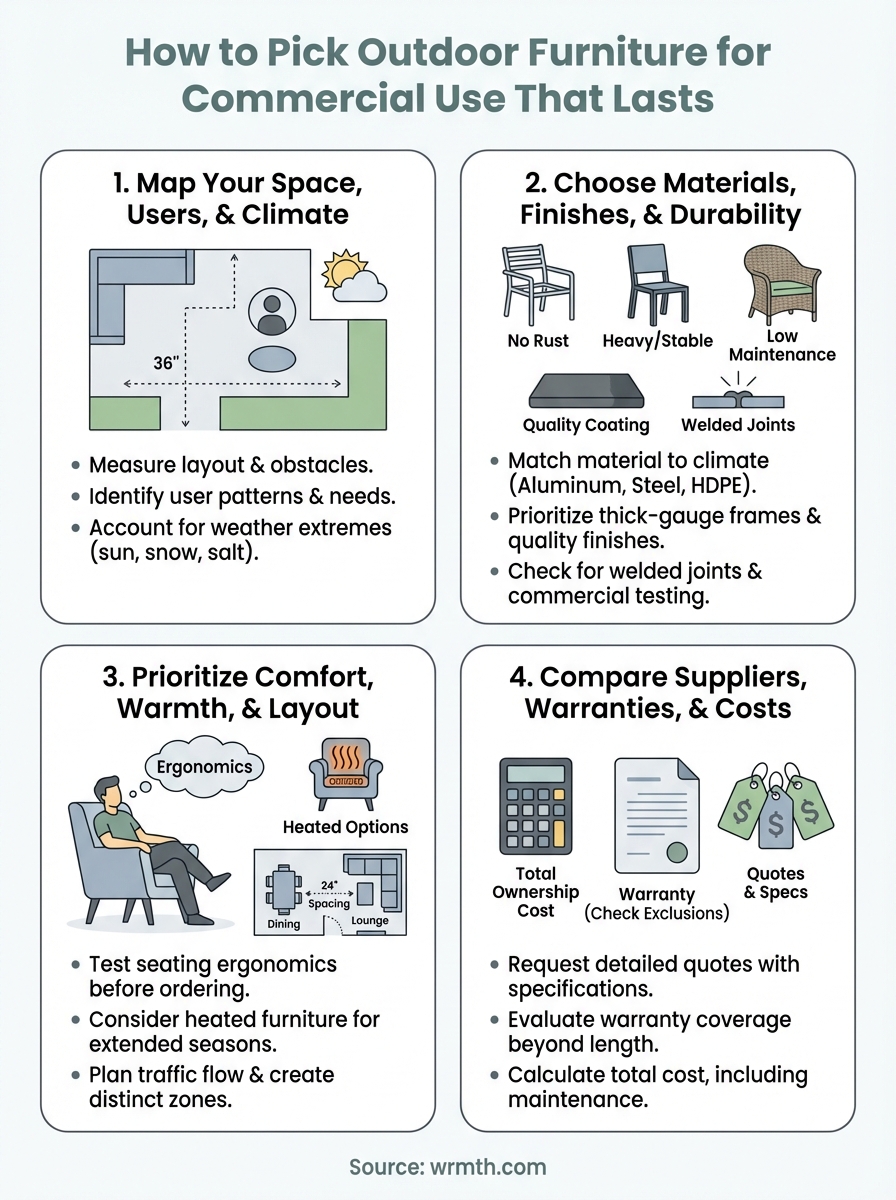
Step 1. Map your space, users, and climate
Start by measuring your outdoor area before you look at a single product catalog. Pull out a tape measure and record the exact dimensions of your patio, deck, or outdoor seating zone. Note any fixed obstacles like posts, planters, or HVAC units that limit furniture placement. Sketch a simple overhead view on graph paper or use a basic drawing app on your phone. This physical mapping stops you from ordering pieces that looked perfect online but block pathways or crowd tables together when they arrive. Your staff needs clear traffic lanes at least 36 inches wide for safe movement between tables, and guests need space to pull chairs out without hitting neighboring diners.
Measure and document your layout
Record the square footage of each distinct zone in your outdoor space. A restaurant patio might have a bar area separate from dining tables, while a hotel pool deck splits into lounge zones and bistro seating. Calculate how many seats you actually need based on your busiest service periods, not your slowest days. Write down the ceiling height if you have overhead coverage, since this affects which umbrellas or shade structures fit without looking cramped. Take photos from multiple angles to reference later when you compare furniture configurations from different suppliers.
Identify your typical user patterns
Think about how customers actually use your space throughout a typical day. Do guests sit for quick 30-minute lunches or settle in for hours with drinks? Will elderly visitors need chairs with armrests and higher seat heights, or does your clientele prefer low lounge seating? Track the weight distribution if possible, since heavier users require more robust frame construction. A sports bar serving large groups needs different seating than a boutique hotel cafe. Your outdoor furniture for commercial use must match these real usage patterns, not what looks good in marketing photos.
Map your space, understand your users, and account for climate before you browse suppliers. These three factors determine which furniture actually survives in your specific environment.
Account for local weather extremes
Check your area's temperature range across all four seasons, including overnight lows and peak summer highs. Coastal businesses face salt spray corrosion that destroys untreated metals within months. Mountain locations deal with heavy snow loads that collapse weak frames, while desert properties battle relentless UV radiation that fades and cracks inferior materials. Record your average annual rainfall and wind speeds during storms. This climate data tells you exactly which materials and finishes you need, eliminating products that cannot survive your specific conditions.
Step 2. Choose materials, finishes, and durability
Material selection determines whether your outdoor furniture for commercial use survives five years or five seasons. Every material brings specific strengths and weaknesses that matter more in commercial settings than residential ones. Aluminum resists corrosion naturally but dents easier than steel. Synthetic wicker offers style without wood's maintenance demands but costs more upfront than basic plastic resin. You need to match material properties to your specific climate data from Step 1, not pick whatever looks attractive in product photos. The right material for a beachfront cafe differs completely from what works at a mountain resort.
Aluminum frames and furniture
Aluminum stands out as the most popular choice for commercial outdoor settings because it never rusts, even in coastal salt spray environments. The material stays lightweight enough for staff to rearrange seating quickly during service, yet modern commercial-grade aluminum uses thick-gauge tubing and welded construction that handles heavy daily use without bending. Look for powder-coated finishes in light colors, since bare aluminum conducts heat and becomes uncomfortable in direct sun. Commercial aluminum furniture typically features reinforced joints and thicker wall tubing than residential pieces, making it strong enough for public spaces while remaining easy to move and stack for storage.
Steel and wrought iron options
Steel furniture delivers maximum durability when you need pieces that absolutely will not move or tip in high winds. The material's weight keeps outdoor furniture stable without adding concrete bases or sandbags. Choose stainless steel for coastal locations where salt corrosion attacks other metals within months. Wrought iron offers classic styling but requires vigilant maintenance since any scratch in the protective coating lets rust start. Both materials need quality powder coating applied thick enough to prevent corrosion, and you must inspect high-wear points like chair legs and table bases every season to catch coating damage before rust spreads underneath.
Synthetic materials and resin options
All-weather resin wicker woven over aluminum frames combines visual appeal with practical durability for commercial settings. The synthetic material resists UV fading, moisture absorption, and temperature extremes that would destroy natural wicker in one season. High-density polyethylene (HDPE) furniture made from recycled plastics offers the lowest maintenance option available, since the color goes through the entire material instead of sitting on the surface as paint. These pieces never need refinishing, resist staining from food and drinks, and survive freezing temperatures without cracking. The material costs more initially than basic resin but eliminates ongoing maintenance labor completely.
Match your material choice to your worst weather conditions, not your average days. The harshest week of the year determines whether your furniture survives or fails.
Protective coatings and finish quality
Powder coating thickness matters more than the base material in many cases. Commercial-grade applications use 3-4 mils of coating compared to 1-2 mils on residential furniture, creating a barrier that protects metal from moisture and oxidation. Request AAMA 2604 certified finishes as a minimum standard, which guarantees the coating survives accelerated weathering tests equivalent to years of outdoor exposure. Check that welds and joints receive full coating coverage, since these stress points fail first when coating application gets rushed. Quality finishes add 15-20% to furniture costs but double the usable lifespan by preventing corrosion damage that forces early replacement.
Step 3. Prioritize comfort, warmth, and layout
Guests spend money when they stay comfortable, and uncomfortable seating drives customers away faster than any other factor. You need to physically test furniture before placing bulk orders, not trust product descriptions or showroom appearances alone. Sit in the chairs yourself for at least 15 minutes, checking whether the seat depth, back angle, and armrest height match how your typical customers will use the space. A bar needs different seating ergonomics than a fine dining patio, and lounge areas require completely different comfort standards than quick-service tables. The furniture that works perfectly for a coffee shop fails miserably at a steakhouse where guests sit for two-hour meals.
Test seating ergonomics before ordering
Request sample pieces from suppliers and run real tests during actual service hours. Have your staff sit in the chairs during their breaks and ask servers to navigate around tables with loaded trays. Seat height matters more than most buyers realize, since chairs positioned 18 inches off the ground work well for standard dining but cause problems for elderly guests or anyone with mobility issues. Check that chairs slide under tables completely so guests can reach their plates comfortably, and verify that armrests do not hit table edges when someone pulls their seat forward. Test the weight capacity by having your largest staff members sit down hard multiple times, since commercial furniture must survive far more abuse than careful sitting.
Consider heating solutions for extended seasons
Outdoor heaters have dominated commercial patios for decades, but they waste energy heating empty air while guests still feel cold. Modern heated furniture options deliver warmth directly to people, extending your usable season by months without the operating costs of traditional propane or electric space heaters. Heated chairs let customers relax comfortably on cool evenings when standard outdoor furniture for commercial use would sit empty, translating directly to additional revenue during shoulder seasons. Calculate the extra weeks of patio service you gain against the investment cost, since even ten additional operating days per year can justify premium furniture that keeps guests warm and spending.
Comfort drives dwell time, and dwell time drives revenue. Invest in furniture that keeps guests relaxed and warm enough to order another round instead of heading inside.
Plan traffic flow and zone layouts
Sketch your table arrangements on graph paper using the dimensions you recorded in Step 1, leaving adequate space between zones for service and guest movement. Create distinct areas for different activities: quiet dining sections, social bar zones, and waiting areas each need different furniture styles and spacing requirements. Position heavier pieces like large tables in permanent spots and use lighter chairs that staff can rearrange as needed. Allow at least 24 inches between chair backs when tables sit near each other, giving servers enough room to deliver food without bumping into seated guests. Mark emergency exit paths on your layout and verify that furniture placement never blocks these routes, since fire codes apply to outdoor seating just as strictly as indoor spaces.
Step 4. Compare suppliers, warranties, and costs
Price alone tells you nothing about value when you shop for outdoor furniture for commercial use. A $200 chair that lasts two years costs more than a $400 chair that serves customers for eight years, yet most buyers focus on the sticker price and ignore the total cost of ownership. You need to request detailed quotes from at least three suppliers, compare their warranty terms line by line, and calculate what each option actually costs over its expected lifespan. This comparison process separates suppliers who stand behind their products from those who disappear the moment something breaks.
Request detailed quotes with specifications
Contact suppliers and ask for itemized quotes that break down exactly what you receive at each price point. Demand written specifications that include frame materials, gauge thickness, weld type, coating standards, and weight capacity for each piece. Generic descriptions like "commercial grade aluminum" mean nothing without specific details about tubing diameter and wall thickness. Request photos of joint construction and ask how the supplier reinforces stress points like chair legs and table corners. Get delivery timelines in writing, since lead times stretch from weeks to months depending on your location and order size. Ask about minimum order quantities and whether you can order replacement parts individually if a piece gets damaged years later.
Evaluate warranty coverage and exclusions
Read warranty documents completely before you sign purchase orders, paying special attention to what the warranty excludes rather than what marketing materials highlight. Most suppliers cover manufacturing defects but exclude damage from normal wear, weather exposure, or improper maintenance. Look for warranties that specify frame coverage separately from finish coverage, since paint and powder coating typically carry shorter protection periods than structural components. Check whether the warranty requires you to ship damaged items back at your expense or if the supplier sends replacements directly. Verify that warranty service stays active even if the supplier changes ownership or goes out of business, and confirm whether coverage transfers if you sell your business.
Compare warranties by what they exclude and how they handle claims, not by the length of coverage periods listed in marketing materials.
Calculate total ownership costs
Build a simple cost comparison spreadsheet that tracks purchase price, estimated delivery costs, expected maintenance requirements, and replacement timeline for each supplier option. Factor in the revenue loss when furniture sits unusable during repairs or while you wait for warranty replacements. Add columns for annual maintenance costs like refinishing, cushion replacement, and touch-up paint. Divide the total cost by expected years of service to find the true annual expense for each option. This calculation often reveals that mid-priced furniture from suppliers with strong warranties costs less over time than either cheap pieces that fail fast or premium options that exceed your actual durability needs.
Make every outdoor seat count
You now have the complete framework to select outdoor furniture for commercial use that actually survives your specific conditions. Start by mapping your space and climate, then match materials to those exact requirements. Test furniture physically before placing bulk orders, focusing on comfort factors that keep guests seated longer and spending more. Compare suppliers based on total ownership costs rather than sticker prices alone, and verify warranty coverage protects you from both manufacturing defects and premature wear failures.
The businesses that profit most from outdoor seating extend their usable seasons beyond traditional limits. Traditional patio heaters waste energy and still leave guests feeling cold, but modern heated furniture delivers warmth directly where people sit. Explore heated outdoor furniture options that let you serve customers comfortably during shoulder seasons when standard outdoor furniture for commercial use sits empty and costing you money. Every additional week of patio service translates directly to revenue that standard furniture cannot capture.